
Warm Contemporary Design for Small Spaces: Keeping Clutter Out

Small rooms reveal everything. One extra chair, one pile of mail, or one bulky lamp can make a space feel crowded before anyone sits down. The good news is that a small home does not need to feel bare to feel calm. Warm contemporary design gives you a useful middle ground: clean lines, soft textures, natural materials, and enough breathing room to enjoy daily life.
The goal is to make every object earn its place. In a compact apartment, studio, bungalow, or townhouse, warmth comes from what you choose carefully, while clutter stays away because storage, layout, and habits work together.
Start with fewer pieces that do more
A small space becomes harder to manage when furniture performs only one task. A side table that only holds a cup, a bench that does not open, or a decorative cabinet with shallow shelves may look nice, but they often steal square footage without solving a real problem.
Choose pieces that carry visual weight well and serve daily routines. That might mean a storage ottoman, a bed with drawers, or a media console with doors instead of open cubbies. Closed storage matters because small rooms carry visual noise quickly. Even neatly stacked items can look busy when they are always on display.
A warm contemporary room usually benefits from furniture with these traits:
Slim legs
Raised furniture lets the floor show, which makes the room feel lighter.
Natural finishes
Oak, walnut, rattan, linen, wool, leather, and ceramic add warmth without adding clutter.
Simple silhouettes
Clean shapes keep the room from feeling crowded, even when the materials are rich.
A useful rule is to leave the center of the room as open as possible. Push storage toward walls, keep pieces low where you can, and avoid placing furniture where it interrupts natural movement. If a chair seems inviting but no one can walk around it easily, it may not belong.
Warmth grows when the room feels easy to use.
Make storage feel built in, even when it is not
Clutter often appears because items lack obvious homes. Keys land on the counter. Shoes gather at the door. Chargers spread across the sofa. None of these things are design failures. They are signs that the room needs better landing zones.
Built-in storage looks polished, but renters and budget-conscious homeowners can create a similar effect with freestanding pieces. The key is to choose storage that matches the wall color, fits the scale of the room, and reaches the right height.
A tall cabinet in the same color family as the wall can blend in better than several small pieces scattered around the room. A floating shelf with hooks below can turn a narrow wall into a drop zone for bags, scarves, and keys. The most useful storage is specific. Instead of buying another basket and hoping it solves the mess, assign it a job.
Item that piles up | Better storage choice |
Shoes near the door | Slim closed shoe cabinet |
Blankets on the sofa | Storage bench or large lidded basket |
Mail on the counter | Wall pocket near the entry |
Cords and remotes | Small drawer in a side table |
Cleaning supplies | Narrow utility cabinet or under-sink bin |
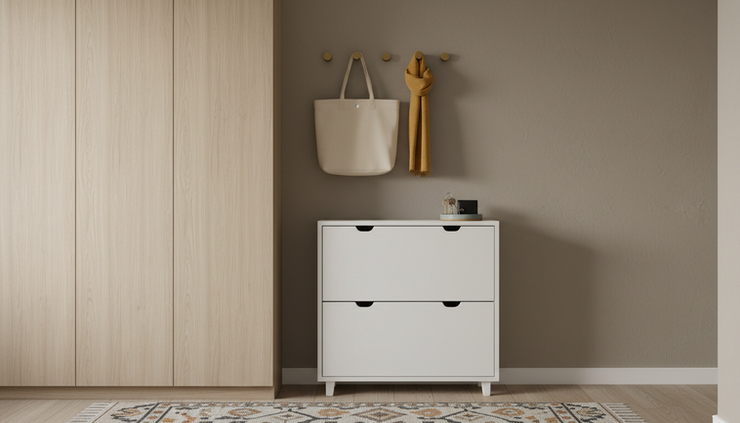
Use a calm palette with texture instead of excess decor
Decor can warm a small room, but too much of it can shrink the space. Warm contemporary design works best when color, texture, and material do the work that extra accessories might otherwise do.
Start with a calm base. Warm white, ivory, mushroom, oatmeal, warm gray, taupe, sand, and soft clay tones all work well. These shades reflect light without feeling stark. Then add contrast through natural wood, black metal, aged brass, stone, or woven fibers.
Texture matters because it gives the eye something to enjoy without requiring more objects. A small room with linen curtains, a boucle chair, and a wood cabinet can feel complete with very little decoration. The surfaces do not need to be packed with vases, frames, and trays.
Try this simple layering method:
Choose one soft base color for the walls or largest surfaces.
Add one main wood tone.
Bring in two or three tactile materials.
Use one deeper accent for contrast.
Leave some surfaces empty on purpose.
Empty space is part of the design. A bare stretch of wall can make art look more intentional. A shelf with fewer items gives each piece more presence.
This is where restraint becomes warm rather than cold. The room still has softness, but the softness comes from fabric, light, and shape instead of visual clutter.
Let light and reflection open the room
Poor lighting can make clutter feel worse. Shadows gather in corners, surfaces feel heavy, and a small room starts to feel closed in. Good lighting does the opposite. It separates zones, softens edges, and makes everyday items look more intentional.
Aim for a mix of light sources at different heights.
Overhead light
Choose a simple fixture with a warm bulb and a soft shade or diffuser.
Task light
Add a reading lamp, under-cabinet light, or small sconce where focused light helps.
Ambient light
Use table lamps, floor lamps, or plug-in wall lights to soften the room at night.
Reflective surface
Place a mirror where it catches natural light, not where it reflects clutter.
Bulb temperature matters. Many warm contemporary rooms feel best with warm white light, often around the range commonly labeled soft white or warm white. Very cool bulbs can make natural textures feel flat. Very yellow bulbs can muddy the palette.
Mirrors can help, but only when placed thoughtfully. A mirror across from a window can brighten a room. A mirror across from a messy kitchen counter doubles the mess.
Clutter can also be digital in how it affects a room. Chargers, cables, speakers, remotes, and small devices create visual noise. Use cord clips, cable boxes, charging drawers, or a single charging tray.
Choose decor that earns its space
Use fewer, stronger choices. A large piece of art over the sofa can set the tone for the whole room. A handmade ceramic vase can bring shape and warmth to a shelf. A plant in a simple pot can add life without needing a collection of smaller accents around it.
For shelves, leave gaps. Mix vertical and horizontal shapes, but do not fill every inch. Books, a bowl, a framed piece, and one small lamp can be enough. If shelves look busy, remove half the accessories, then put back only the pieces that contribute most.
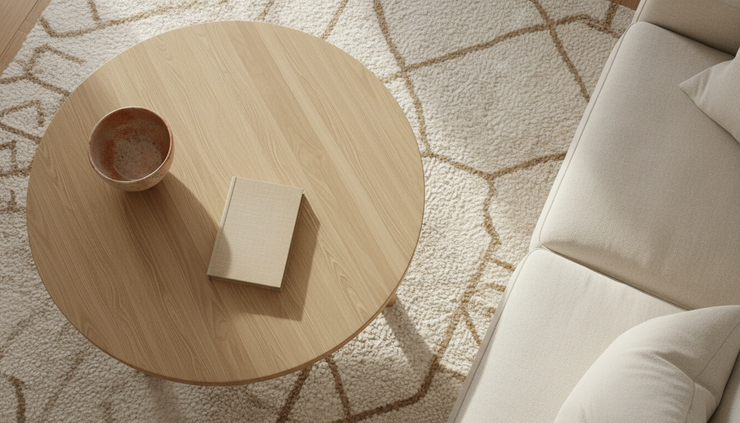
Textiles are often the safest way to add warmth. They soften sound, add color, and make a room feel lived in without crowding surfaces. Choose a rug that fits the sitting area rather than a tiny one that floats alone. Use pillows in related tones, not too many patterns competing for attention. Let one throw blanket be visible, not four.
The best test is simple: does the piece make the room feel better when seen every day? If the answer is yes, it can stay. If it only fills space, the room may feel better without it.
A warmer small space starts with what you remove
Keeping clutter out is not a single weekend project. It is a way of setting up a room so the easy choice is also the tidy choice. The right cabinet near the door. The right drawer for remotes. The right lamp in the corner. The right amount of open space on a shelf.
Warm contemporary design for small spaces works because it respects both comfort and limits. It lets the room feel soft, personal, and current without filling every surface. It favors texture over excess, closed storage over piles, and daily ease over decoration that gets in the way.


Comments